

BeDford, NH

Dentures

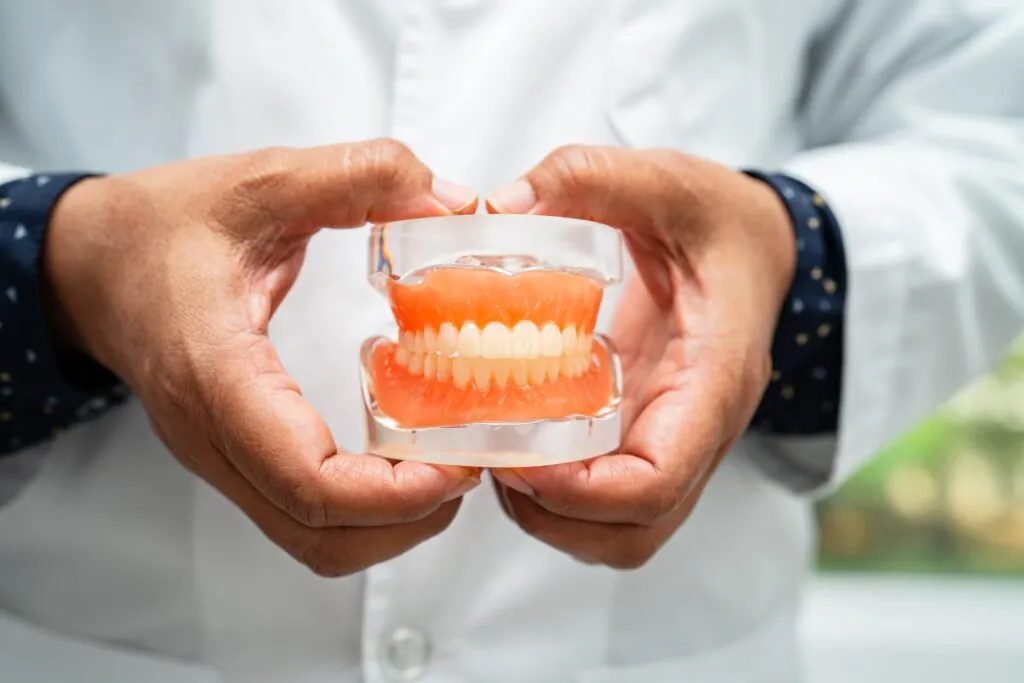
At Birch Family Dentistry, we provide two main kinds of dentures: partial and complete. Partial dentures are used when multiple teeth are missing, but some natural teeth remain. The partial denture fills in the gaps left by the missing teeth and is usually held in place by attaching to the neighboring natural teeth. A complete denture replaces all of the teeth in an arch. You may need a complete denture for the upper arch, lower arch, or both, depending on your needs.

How Are Dentures Made?
The denture development process takes a few weeks and several appointments.
Once your dentist or prosthodontist (a dentist who specializes in the restoration and replacement of teeth) determines what type of appliance is best for you, the general steps are to:

Take a series of impressions of your jaw and take measurements of how your jaws relate to one another.

Create models, wax forms, and/or plastic patterns in the exact shape and position of the denture to be made. You will “try in” this model several times and the denture will be assessed for color, shape, and fit before the final denture is made.

Finale denture is made, and delivered to you.

Adjustments will be made as necessary.

Signs You Need Dentures

Dentures are needed for patients who may have similar or completely different cases. Dentures are the perfect dental solution to replace missing teeth that patients may have lost due to age, illness, injury, and other situations. Below are four signs dentures may be the right treatment for you.

Missing Teeth

Most patients find missing teeth unattractive and embarrassing. However, it is not always the patient’s fault for having missing teeth, whether due to an injury, gum disease, or other possible reasons. Dentures allow those patients to regain confidence by restoring their smiles.

Trouble Eating or speaking

If you are struggling when eating or speaking with your missing teeth, it may be a sign that dentures are needed. Teeth are essential for everyday tasks like speaking and chewing foods. If chewing and biting into foods are challenging or you are finding it hard to talk clearly, contact your dentist for a denture consultation.

Gum Pain

Tender, sore gums are another sign that dentures are a great alternative to missing teeth. Whether your teeth have decayed and are causing tenderness to the gum, or you are suffering from a medical condition or injury, dentures can help ease your discomfort. Relieve your sore gums with a denture consultation and experience a brighter future ahead.

Sunken Face or Appearance (due to missing teeth)

Your teeth are essential for providing speaking properties and structuring your face. When patients have lost many teeth, their faces may begin to sink in. Dentures help replace this look by adding fake teeth to regain a confident appearance and normal facial appearance.

Knocked Out Permanent Tooth

Recover the tooth and hold it by the crown (top), not the root. Rinse, but do not over-clean or over-handle. Put and hold the tooth in place using a clean piece of gauze or cloth. If reinsertion is impossible, carry the tooth in a cup of milk or water. Stopping the bleeding is most important. Don’t remove any attached tissue, they help re-secure the tooth!

Cold, Canker Sores, and Abscesses

Over-the-counter medications such as acetaminophen can provide temporary relief as well. Use only as directed. An abscess is a serious infection that typically occurs in the gumline around the teeth. If left alone, infections might spread to the body. Visit your emergency provider as soon as possible if you discover pain or swelling in the gums.

Stay Connected with Us

We are here to help!

Contact us to schedule an appointment today.

What To Expect When Getting Dentures

  • Schedule A Consultation: The first step to a new smile is taking the initiative to schedule a consultation! Our office staff will be more than happy to find a time that works best for you. Contact our office for a denture consultation today!
  • Craft Your Denture Treatment: During your consultation, our team will devise a customized plan based on your goals and determine if a partial or complete denture is needed. After your consultation, your treatment will be prepared by taking an impression of your teeth. Dentists will use a mold to take these measurements to ensure your denture will be perfectly aligned with your mouth. Your impression will be sent to a lab where your denture will be crafted!
  • Denture Fitting: Once your dentures arrive, you will come back to our office for a fitting. This will determine whether your new smile fits perfectly or needs a few adjustments because you are experiencing discomfort or pain.
  • Adapt To Your New Lifestyle: The final step is to adapt to your new lifestyle! Dentures may take some time to adjust to, and get used to the feeling of them and speaking with them. Eating, drinking, and talking may seem funny at first, but once you get used to your dentures, you will feel as good as you did with regular teeth!
  • Adjust As Needed: Adjustments are common after receiving your new dentures. Whether you need adjustments right away after your first try-in or you notice a few days or weeks later that something is off, our office can provide you with the necessary adjustments to ensure you are comfortable.

Frequently Asked Questions About Dental Emergencies

What is the difference between complete and partial dentures?

Complete dentures are used when all missing teeth need to be replaced. A partial denture means only some teeth may be missing, and a partial replacement is needed to replace those teeth. Partial dentures are good placement holders and also prevent the natural teeth next to them from shifting. Both dentures are crafted the same way.

How long will dentures last?

Dentures typically last between 5-7 years. Like natural teeth, dentures wear down and stain over time with drinking, chewing, and biting. Adjustments will be needed throughout that time frame to ensure they are correctly aligned and no pain or issues are involved. Always alert your dentist at your checkups about any complications or irritations you are experiencing with your dentures.

Who is a candidate for dentures?

The ideal candidates for dentures are patients with missing teeth and looking for an affordable and effective way to replace them. Complete dentures are ideal for those with no teeth left, while partial dentures are intended for patients missing only a few teeth. If you have missing teeth, are struggling while eating or chewing, and have trouble speaking or going about your daily activities, contact your dentist for a denture consultation. 

Does insurance cover dentures?

Most insurance plans will cover a portion of your denture treatment. Although many different insurances and plans pay for different types of treatments, our amazing staff will work with you to find out how much your insurance plans cover and come up with a financial plan to make sure everything works for you. Caring for your teeth and giving yourself confidence is always worth the investment!